
Masking Around Film Negatives Can Make a Difference
When scanning film on a flatbed transparency scanner, it is easy to focus on resolution, bit depth and software settings. An equally important consideration is how much unwanted light reaches the sensor during the scan.
A matte black mask around the film or calibration target can reduce this unwanted light. It does not change the scanner hardware, but it can lower the dark-end floor that limits how well the scanner distinguishes dense areas of film.
Flare and stray light
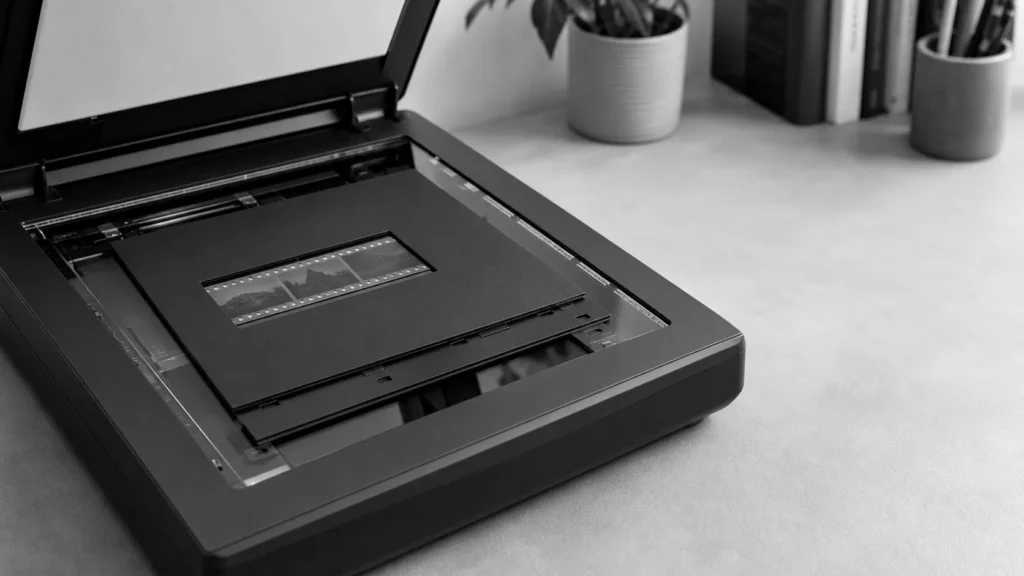
Ideally, the scanner measures only the light passing through the film. In practice, some light can pass through unused areas of the scanner bed, reflect within the transparency unit or scanner optics, and reach the sensor as stray light.
This creates flare: an added light signal that lifts the darkest scan values. Dense film passes very little light, so the flare can become a large part of the measured signal.
Why the dense end is affected first
A 16-bit TIFF can store 65,536 code values, but bit depth does not create extra optical separation. If two dense areas of film deliver almost the same signal to the sensor because both are dominated by stray light and noise, the TIFF cannot restore the lost distinction later.
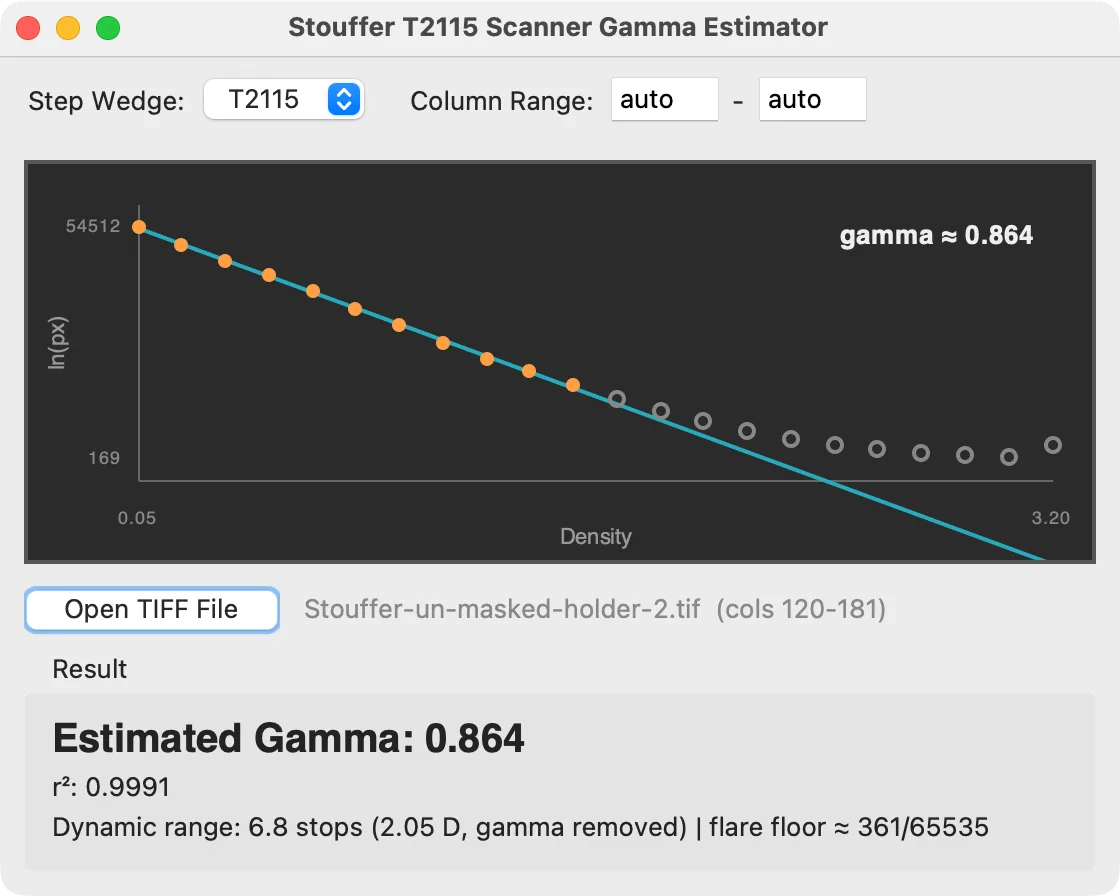
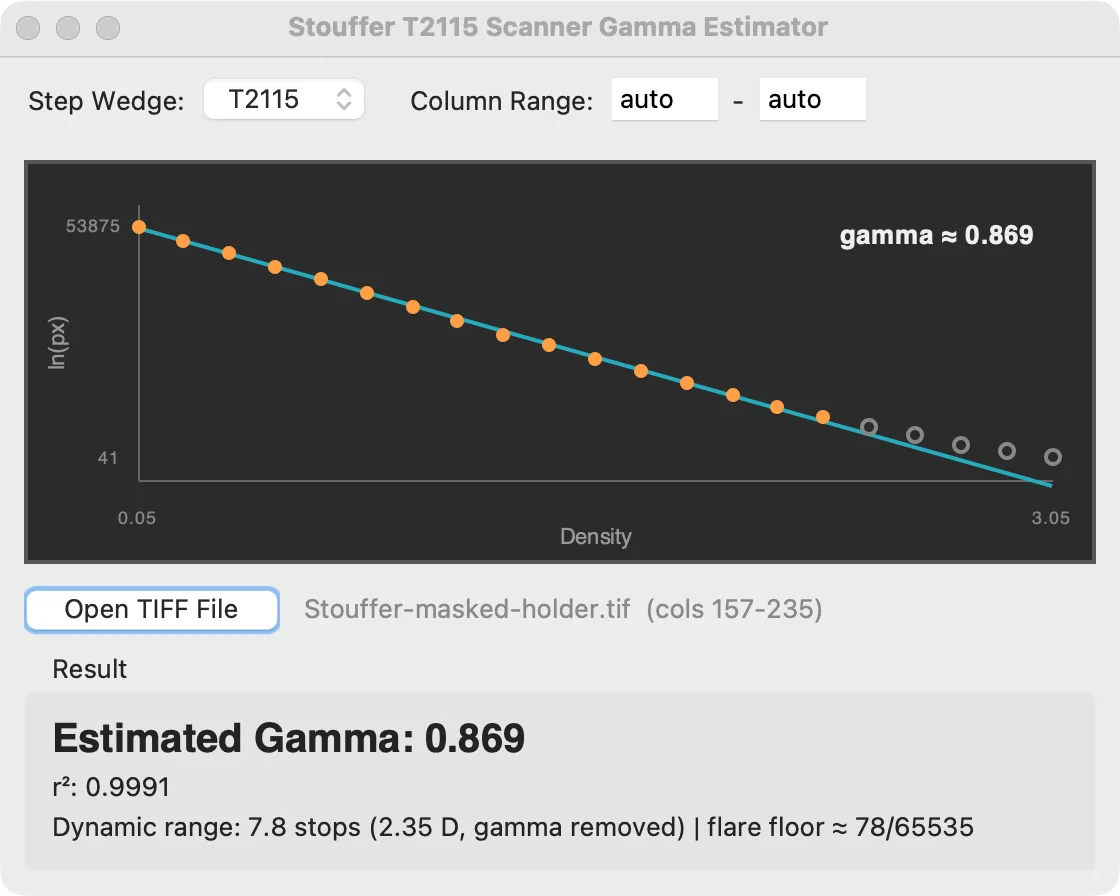
This is why a scan can look technically sound while the densest negative areas have limited separation. On a step wedge, the effect appears when the densest patches stop following the expected line and begin to bunch towards a floor.
What a mask does
A mask limits the illuminated area to the film or target being scanned. Less light passes through the surrounding empty area, leaving less opportunity for that light to contribute to flare.
The practical aim is a lower dark-end floor and better separation between dense film areas. The improvement depends on the scanner, holder, film size, mask design and the particular scan setup.
A measured example
In a test with a Stouffer T2115 transmission wedge on an Epson V800, the measured floor was above 300 counts without a mask and below 100 counts with a matte-black mask around the wedge.
That is at least a threefold reduction in the measured floor under those test conditions. It is encouraging evidence that masking reduced stray light, but it is not by itself proof of a fixed 1.6 stop increase in usable dynamic range. To establish the actual gain, compare how many wedge steps remain reliably separated above the floor in each scan.
Why it matters for calibration
Step wedges are useful for checking whether a scanner response is smooth and predictable. Flare particularly affects the dense end of the measurement, where the signal is small.
Masking therefore makes it easier to assess the point at which the scanner runs out of useful separation. It does not replace a proper calibration method, but it helps ensure that the measurement reflects the film and scanner response rather than unnecessary stray light around the target.
Practical masking tips
- Use matte-black card or another non-reflective material.
- Avoid glossy surfaces and bright gaps around the film or target.
- Cut an aperture only slightly larger than the area being scanned.
- Keep the mask flat and outside the image area.
- Compare masked and unmasked scans with the same exposure, resolution and scanner settings.
A practical scanning workflow
For the best results, start with a clean, low-flare transparency scan. DBW Linear Scanner is designed to produce a 16-bit linear TIFF from supported Epson V700/V800/V850 transparency scanners, giving you a consistent starting point without an unwanted display style gamma curve.
That linear scan can then be opened in DBW Linear Scans for negative conversion. Because the file retains a predictable tonal response, you can make better informed adjustments to film base, dense point, exposure and inversion rather than trying to recover detail that was already obscured during scanning.
Masking is a simple part of this workflow: reduce flare at capture, preserve more usable tonal separation in the TIFF, then convert the negative from cleaner source data.
Takeaway
Masking does not alter the scanner’s sensor, but it can materially increase the effective dynamic range available in a real transparency scan by lowering the flare floor. For flatbed film scanning, it is a simple, low-cost way to lower the dark end floor and preserve more useful tonal separation where it matters most.